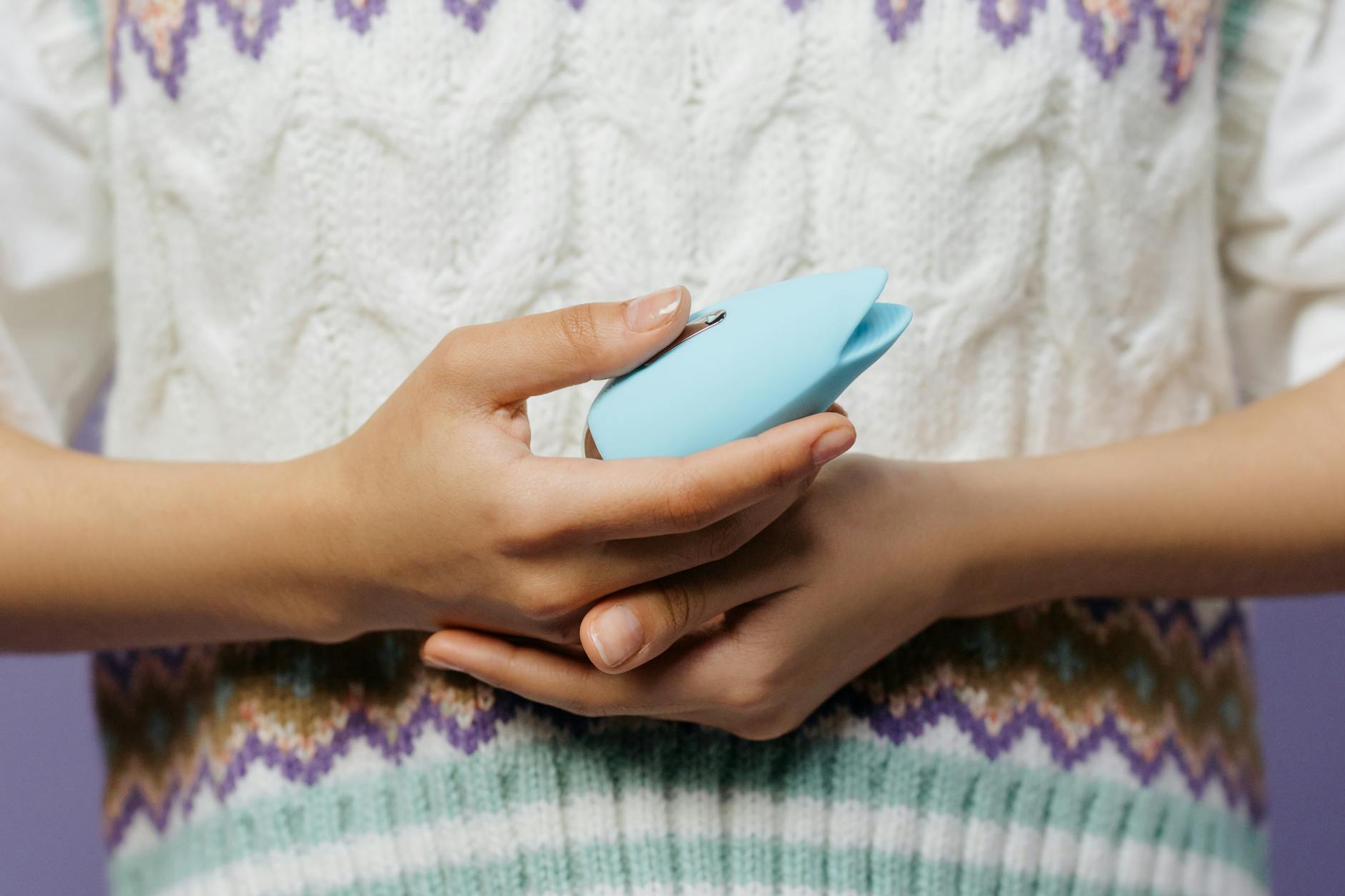
Let's start with what your body's actually doing
Honestly? Your clitoral sensitivity isn't stable. It shifts predictably across your cycle, week by week. That's not a flaw or something to work around. It's information. And once you understand the pattern, you can work with it instead of against it.
This is especially true if you have sensitive skin or find traditional vibrators too intense, too numbing, or just wrong on certain days. A lot of people assume their body is broken when really, the toy just doesn't match where they are in their cycle.
How your cycle actually shifts sensitivity
Follicular phase (days 1-14, roughly). Estrogen is climbing. Blood flow to your clitoris increases. The tissue becomes slightly more engorged, which means it can handle more direct stimulation. Sensitivity feels heightened but less reactive. You can push intensity without the same sharp sensation you might feel mid-cycle.
Ovulation window (days 12-16, roughly). Peak estrogen, then the luteal shift. This is when clitoral sensitivity peaks. The tissue is maximally engorged, the nerve endings are most responsive, and even light suction or vibration can feel intense. This is where traditional vibrators often become too aggressive, even on low settings.
Luteal phase (days 17-28, roughly). Progesterone rises. Blood flow to the clitoris actually decreases slightly. Sensitivity feels duller, more diffuse. You often need more consistent stimulation, longer build-up, or slightly higher intensity to reach the same response you got during ovulation.
Menstruation (days 1-5, roughly). Cramping, pelvic tension, and inflammation mean the clitoris itself can feel tender or raw. Sensitivity is unpredictable. Some people want nothing to do with stimulation. Others find light, rhythmic suction deeply relieving.
Why lemon vibrators and air suction feel better across your whole cycle
Traditional vibrators buzz. They create continuous, uniform vibration against the tissue. That works fine when your clitoris is slightly less sensitive. But during ovulation or if you have naturally sensitive skin, that constant buzz can feel like friction overload, numbness, or even pain.
Lemon clitoral vibrators and other lemon suction toys work differently. They create a gentle pulling sensation, not grinding friction. That matters because suction engages the entire clitoral structure, not just the surface. You're stimulating nerve clusters deeper in the tissue, which often feels more responsive and less irritating.
During high-sensitivity phases (ovulation, pre-menstrual), suction lets you stay at lower intensity settings and still feel plenty. You're not fighting friction. During lower-sensitivity phases (late luteal, menstruation), you can increase intensity without the sharp burn that comes with vibration.
The result? One toy that actually works across your whole cycle instead of something that feels perfect for a week and unbearable for the other three.
The skin sensitivity factor your cycle affects
Your clitoris isn't just about nerve response. The skin itself changes. During the follicular phase, estrogen supports skin hydration and elasticity. Your clitoral skin feels more resilient, more able to handle sustained contact.
During the luteal phase, progesterone dominates. Your skin becomes slightly drier, slightly more reactive. Friction feels sharper. Suction, on the other hand, doesn't require the same mechanical pressure. It's almost gentler on fragile skin.
If you have sensitive skin generally (reactive to fragrance, prone to irritation, easily inflamed), these shifts are even more pronounced. You might find that traditional vibrators feel okay mid-cycle but genuinely uncomfortable during other weeks. A lemon clitoral vibrator gives you the option to stay gentle when your skin needs it.
Mapping your cycle to lemon vibrator settings
Follicular phase: Start on pattern 2 or 3. Your tissue is responsive but not peak-sensitive. You have room to explore intensity. The suction is still gentler than vibration, so you're not risking over-stimulation.
Ovulation window: Stay on pattern 1 or 2. Light, consistent suction is plenty. Your tissue is maximally engorged and responsive. You might find that you reach orgasm faster than other weeks, or that intensity feels completely different.
Luteal phase: Patterns 3-5 become your friend. Your sensitivity has dipped. The deeper, more consistent suction patterns help build sensation without the aggressive buzz of traditional toys. You're giving your tissue time to respond.
Menstruation: Use your comfort as the guide. Some people want pattern 1, soft and rhythmic. Others skip external play entirely. Neither is wrong. The point is that a lemon suction toy gives you options that a standard vibrator can't match.
Why tracking matters more than you think
A lot of people never realize their pleasure follows a cycle because they're using the wrong tool. If your toy feels overwhelming during ovulation and numb during the luteal phase, you might assume your body is inconsistent or broken. You might actually just need a different stimulation method.
Tracking your sensations alongside your cycle does two things. First, it removes the guesswork. You stop feeling surprised or frustrated and start planning around what actually works. Second, it gives you permission to use different settings, different toys, or different approaches on different days. That's not instability. That's just physiology.
Keep a simple note: day of cycle, intensity level, how it felt. After two or three cycles, the pattern becomes obvious. And once you see it, you can set up your pleasure practice around your actual body, not some imaginary stable version that never existed.
When sensitivity shifts mean something else
Sometimes clitoral sensitivity changes aren't about your cycle at all. Hormonal birth control flattens these shifts (which some people find liberating, others find frustrating). Stress and burnout can mute sensation across your entire cycle. How Lemon Vibrators Help When Pleasure Feels Numb During Stress and Burnout covers what to do when it's not cycle-related.
Medication can also shift baseline sensitivity. If you've recently started or changed antidepressants, anti-anxiety medication, or hormonal treatments, How Lemon Vibrators Help When Antidepressants Affect Your Sexual Response walks through the real impact and what actually helps.
The cycle-based sensitivity shifts are consistent and predictable. Other changes are usually more sudden or stable across weeks. Knowing the difference helps you figure out what's actually happening.
Making lemon toys work across your cycle
If you're new to lemon clitoral vibrators, start at the lowest intensity and notice how it feels at different points in your cycle. Don't judge the toy based on ovulation week. That's your peak-sensitivity baseline. Judge it based on how it works during your less-sensitive phases.
The lemon suction design means you have more granular control than vibration-only toys. You can layer in other sensation (a partner's touch, penetration) without competing for space. The suction isn't fighting friction, so it plays well with other input.
Your cycle isn't a bug. It's data. And once you have the right tool, you can use that data to build a pleasure practice that actually works for your real body across all four weeks.
FAQ: Lemon vibrators and cycle sensitivity
Can I use a lemon suction toy during menstruation?
Absolutely, if it feels good. Some people find light suction deeply soothing during menstruation. It can ease pelvic tension and cramping. Others prefer to skip external play entirely during their period. There's no rule. If you do use a lemon clitoral vibrator during menstruation, start low and listen to what your body actually wants, not what you think you should want.
Why does my clitoris feel numb during my luteal phase even with a lemon vibrator?
Your sensitivity genuinely dips during the luteal phase as progesterone rises and blood flow decreases. A lemon vibrator helps because it can create more consistent, deeper stimulation than traditional toys. But you might still need longer warm-up, more foreplay, or partner involvement to bridge that sensitivity gap. It's not the toy. It's your cycle.
Do birth control pills change how cycle-based sensitivity works?
Yes. Hormonal birth control flattens hormonal peaks and valleys, which means clitoral sensitivity becomes much more stable across the month. Some people love this predictability. Others miss the natural rhythm. If you're on birth control and sensitivity feels numb or inconsistent, the issue is usually something else—stress, medication effects, or just how your specific hormones interact with that specific pill.
Should I use different lemon vibrator patterns on different cycle days?
That's the smart approach, yes. Lower intensity during high-sensitivity days (ovulation), higher intensity during lower-sensitivity phases (luteal). But also trust your intuition. If pattern 1 feels perfect every single week regardless of your cycle, use pattern 1. There's no "correct" way. Just what works for your body.
Can clitoral sensitivity changes mean I have a hormonal problem?
Not necessarily. Cycle-based sensitivity shifts are completely normal physiology. But if your sensitivity is wildly inconsistent (swinging dramatically week to week with no pattern), or if you've noticed a sudden change, it's worth checking in with a gynecologist. PCOS, thyroid issues, and hormonal imbalances can affect sensitivity. But normal cycle variation is just your body being your body.
Why do lemon vibrators feel less numb than traditional vibrators across my cycle?
Because suction engages a broader nerve network in your clitoris, and because the sensation doesn't rely on friction. A traditional vibrator creates stimulation primarily through direct contact and vibration at the surface. Air suction toys like a lemon clitoral vibrator create a gentle pulling that stimulates deeper tissue structures. That feels more responsive, less numbing, across a wider range of sensitivities.